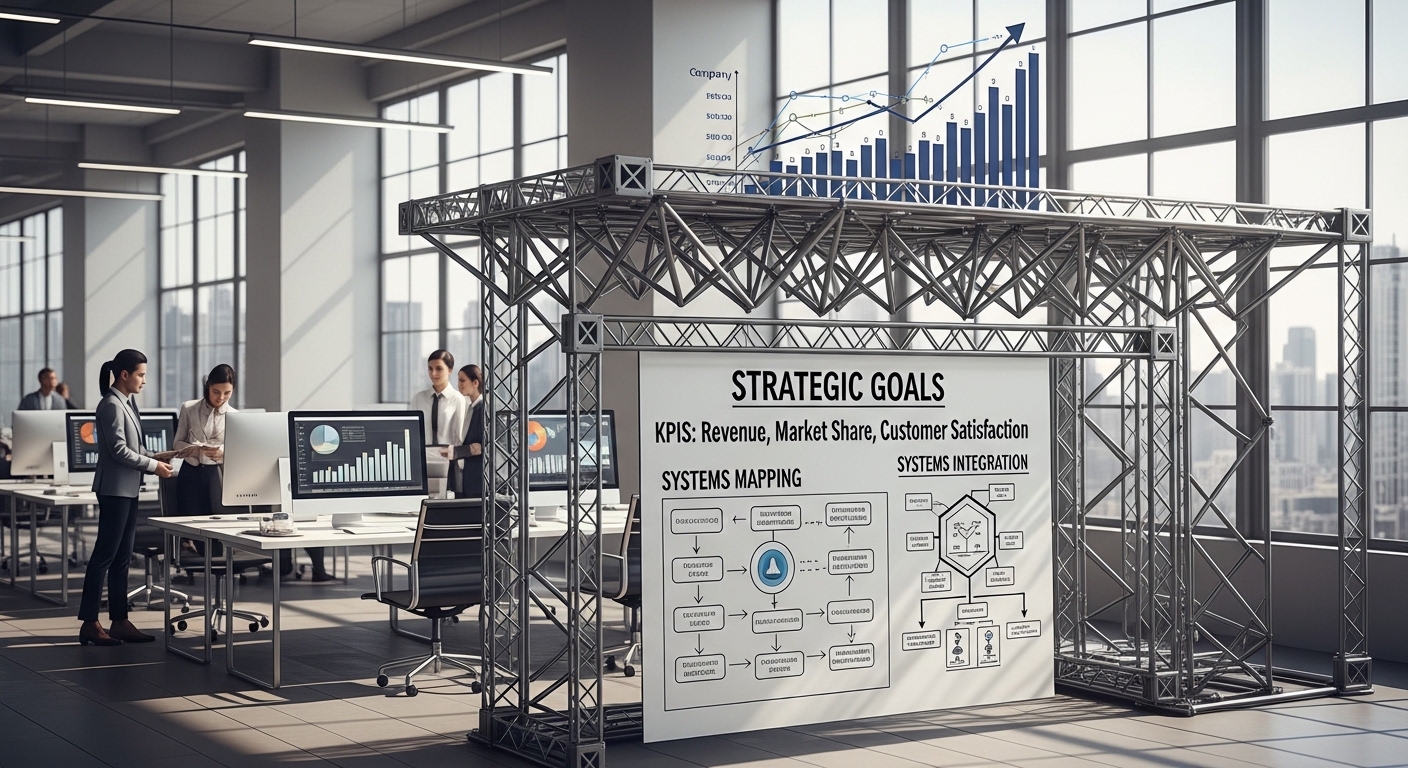
Growth without structure is unstable. Rapid expansion can look impressive from the outside, but it often hides weak foundations underneath. Revenue spikes, new customers arrive, and performance dashboards show upward trends. Yet behind the momentum, systems may be disorganized, roles unclear, and processes inconsistent. When structure is missing, growth creates pressure instead of progress.
Many companies experience short bursts of success driven by strong campaigns, viral exposure, or favorable market conditions. However, without internal alignment and operational clarity, that growth becomes difficult to sustain. Bottlenecks appear as teams struggle to keep up with demand. Communication breaks down between marketing, sales, and operations. Performance becomes unpredictable because outcomes depend on effort rather than repeatable systems.
A sustainable marketing strategy builds architecture — defined processes, clear messaging frameworks, documented customer journeys, channel integration, performance benchmarks, and measurable KPIs. It ensures that every initiative fits into a larger system rather than operating in isolation. Structure does not limit creativity; it strengthens it by providing direction, consistency, and measurable standards.
Instead of chasing quick wins, strategic brands design systems that support scaling. They document workflows, automate repetitive tasks, standardize reporting formats, and align teams under shared objectives. This reduces dependency on specific individuals and increases organizational resilience. When responsibilities and expectations are clear, execution becomes smoother and more reliable.
Architecture creates predictability. Predictability reduces risk. When outcomes can be measured and repeated, decision-making becomes more confident and resource allocation becomes more efficient. Scaling then becomes a controlled process rather than a gamble.
True marketing strength is not explosive, unpredictable growth.
It is controlled, repeatable expansion that can be sustained over time.
When systems support performance, growth becomes intentional, scalable, and sustainable — not accidental.
Leave a Reply