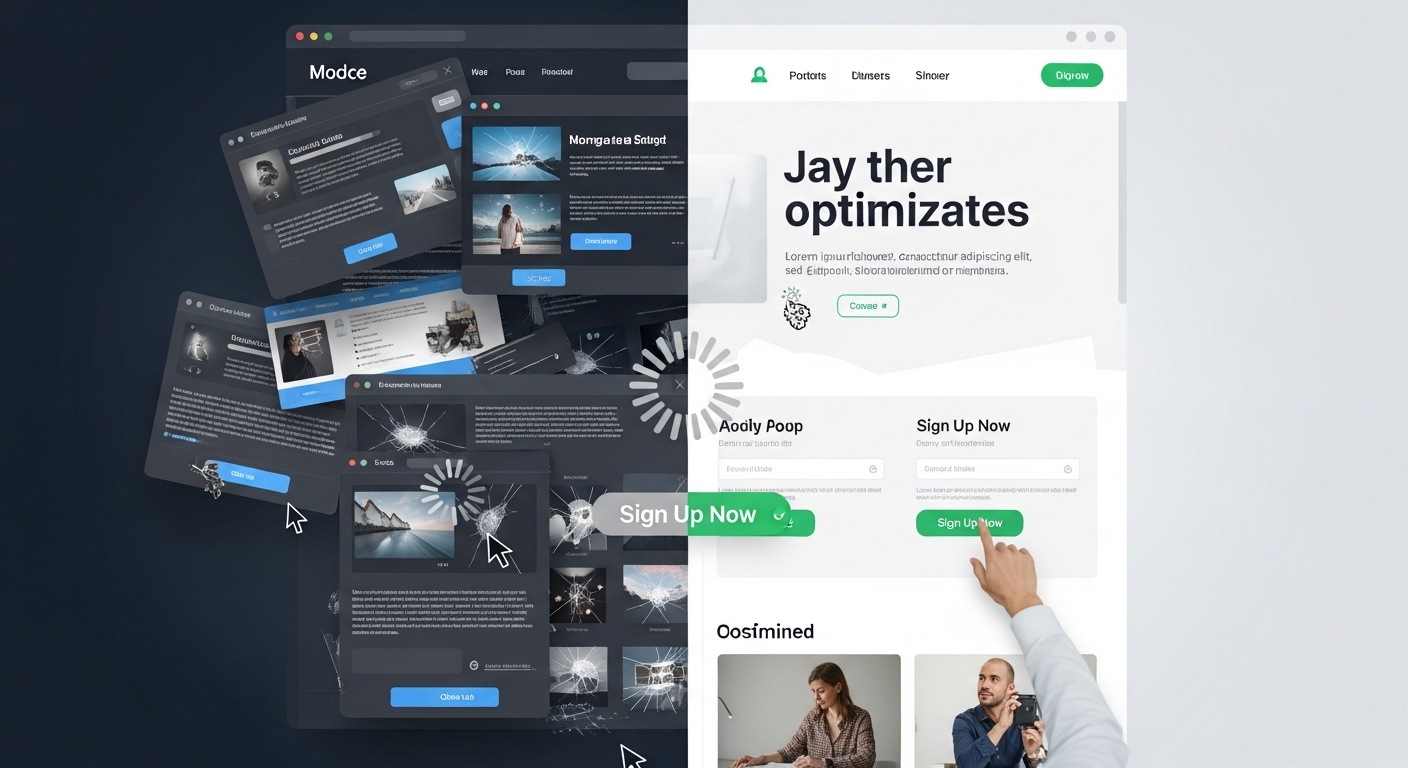
Digital marketing does not end at traffic acquisition. Generating clicks and impressions is only the first step. What truly determines performance is what happens after the user arrives. Traffic creates opportunity — but it does not guarantee results.
If the user experience is weak, campaigns underperform regardless of budget size. You can drive thousands of visitors to a website, but if the page loads slowly, navigation feels confusing, or the value proposition is unclear, users will leave within seconds. Paid traffic cannot compensate for structural friction.
Fast-loading pages, intuitive structure, and clear messaging are not design luxuries. They are performance factors. Every second of delay reduces engagement. Every unclear headline increases cognitive load. Every unnecessary step in the process raises the probability of abandonment.
User experience directly affects:
• Conversion rate.
• Bounce rate.
• Session duration.
• Customer trust.
• Return visit likelihood.
Modern consumers make rapid decisions. Attention spans are short, and alternatives are always one click away. If the value is not immediately visible, comparison begins. If navigation feels complex, hesitation increases. If trust signals such as testimonials, guarantees, or transparent information are missing, exits multiply.
Digital performance improves when experience supports intent. When users land on a page that clearly answers their expectations, friction decreases and engagement deepens. The message aligns with the ad. The structure guides attention logically. The call to action feels natural, not forced.
Marketing attracts users.
Experience keeps them.
When both work together in alignment, performance stabilizes. Conversion rates increase. Acquisition costs decrease. Scaling becomes more predictable because each visitor enters a system designed for clarity and ease.
In digital ecosystems, traffic creates opportunity — but experience determines outcome.
Leave a Reply